

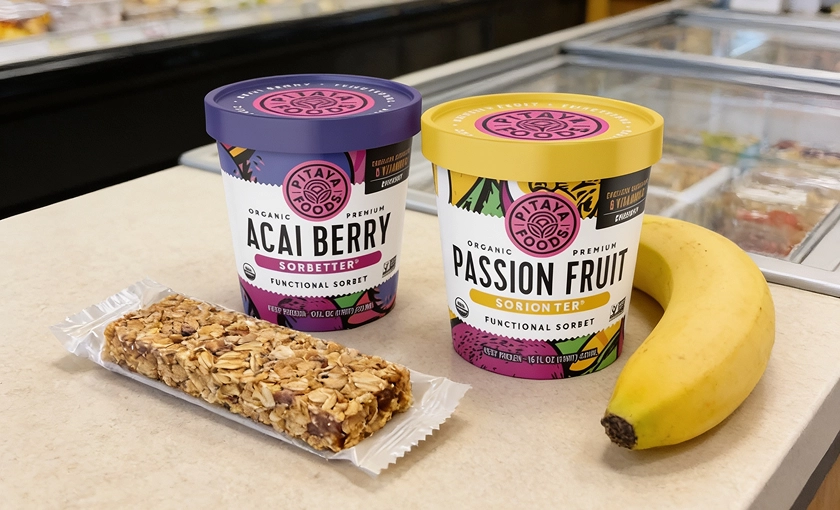
A strong grab-and-go program can do more than fill a cooler. It can help drive repeat visits, increase basket sizes, and give customers another reason to choose your location over a competitor down the street.
The challenge is finding products that fit the realities of your operation. Limited labor, limited preparation space, and competing priorities make it difficult to add items that require extensive training or complicated preparation.
The good news is that not every successful foodservice offering requires a full kitchen. Many operators are finding success with products that deliver convenience for customers while remaining simple for staff to execute.
Why Grab-and-Go Is Becoming a Bigger Opportunity for Convenience Stores, Markets, and Concessions
Foodservice has become an increasingly important differentiator for convenience stores, grocery retailers, concessions, and specialty markets. As customer expectations evolve, operators have an opportunity to move beyond traditional grab-and-go offerings and introduce fresh options that can help drive traffic, increase basket sizes, and create new revenue opportunities.
Consumers Want More Than Chips, Candy, and Fountain Drinks
Consumer expectations continue to evolve.
While traditional convenience items remain important, many customers now expect fresh food options that can serve as a meal, snack, or better-for-you alternative. Whether they’re stopping for breakfast on the way to work, grabbing a quick afternoon snack, or looking for something lighter than a traditional meal, shoppers increasingly want more variety from foodservice offerings.
For operators, this creates an opportunity to expand foodservice sales while differentiating from competitors that still rely primarily on packaged snacks and beverages.
Fresh, Portable Foods Continue to Gain Attention
Portability remains one of the biggest drivers of grab-and-go success.
Customers want products they can eat on the move, bring back to work, enjoy during travel, or purchase alongside other convenience items. Fresh fruit, prepared foods, protein snacks, parfaits, and smoothie bowls are all examples of categories gaining attention because they combine convenience with perceived freshness. This growing demand for fresh grab-and-go options reflects broader convenience store foodservice trends that are reshaping retail foodservice.
The challenge is identifying options that are operationally simple while still delivering the experience customers want.
The Challenge of Expanding Foodservice Without Adding Labor
As foodservice demand grows, many operators are looking for ways to expand their offerings and capture additional sales. The challenge is doing so without adding significant labor, training requirements, or operational complexity. Finding products that are simple to prepare and easy to manage has become just as important as identifying products customers want to buy.
Limited Staff and Limited Time
Most operators aren’t looking to add labor-intensive menu items.
Foodservice teams are often managing multiple responsibilities throughout the day, from stocking shelves and assisting customers to handling food preparation and cleaning tasks. Products that require extensive preparation, specialized training, or significant assembly can quickly become difficult to manage.
That’s why execution matters just as much as demand.
The most successful grab-and-go offerings are often the ones that can be prepared quickly and consistently without disrupting existing workflows.
Consistency Matters Across Every Location and Shift
Consistency becomes even more important for operators managing multiple locations.
Customers expect the same experience regardless of which store they visit or what time of day they make a purchase. Products that rely heavily on employee skill or complicated preparation processes can create inconsistencies that impact customer satisfaction.
Simple preparation methods, standardized portions, and repeatable processes help operators maintain quality while reducing operational challenges.
What Makes a Grab-and-Go Product Worth Adding?
Not every foodservice trend is worth pursuing.
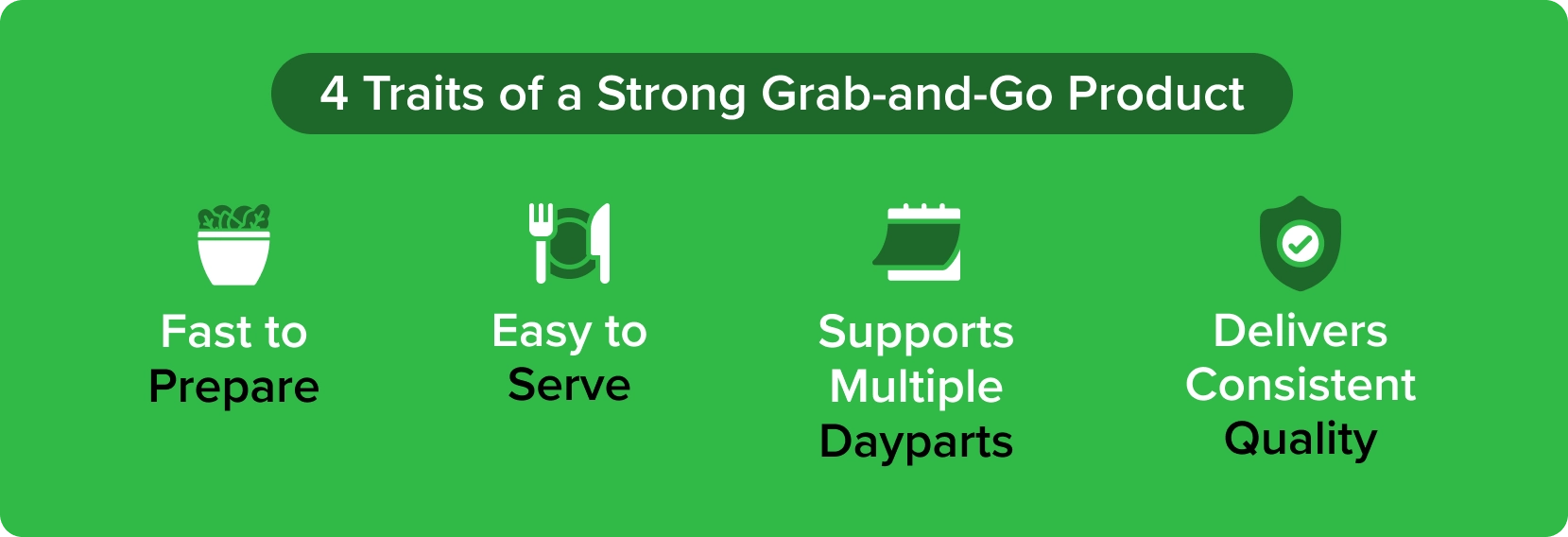
Before introducing a new grab-and-go item, operators should evaluate how well it fits both customer demand and operational realities.
Fast to Prepare and Easy to Serve
Speed matters.
Products that can be prepared quickly help reduce labor demands while supporting faster service during busy periods. Simple preparation also makes training easier and reduces the likelihood of execution issues.
Appeals to Multiple Customer Types
The best grab-and-go products appeal to a wide range of shoppers.
A single item may attract commuters looking for breakfast, students searching for an afternoon snack, health-conscious consumers, or customers seeking a lighter meal option. Broader appeal helps maximize sales opportunities throughout the day.
Supports Multiple Dayparts
Versatility is another important consideration.
Products that work for breakfast, lunch, snacking, and even dessert create more opportunities to generate revenue without requiring operators to introduce separate offerings for each daypart.
Delivers Consistent Portions and Quality
Customers notice consistency.
Products with standardized portions and predictable quality help create a reliable customer experience while simplifying inventory management and food cost control.
Why Smoothie Bowls Are Showing Up Beyond Traditional Cafés
Once associated primarily with smoothie shops and cafés, smoothie bowls are increasingly appearing in convenience stores, grocery foodservice programs, concessions, and specialty retail environments.
A Better-for-You Option for Breakfast, Snacking, and Dessert
Smoothie bowls offer flexibility that many foodservice products lack.
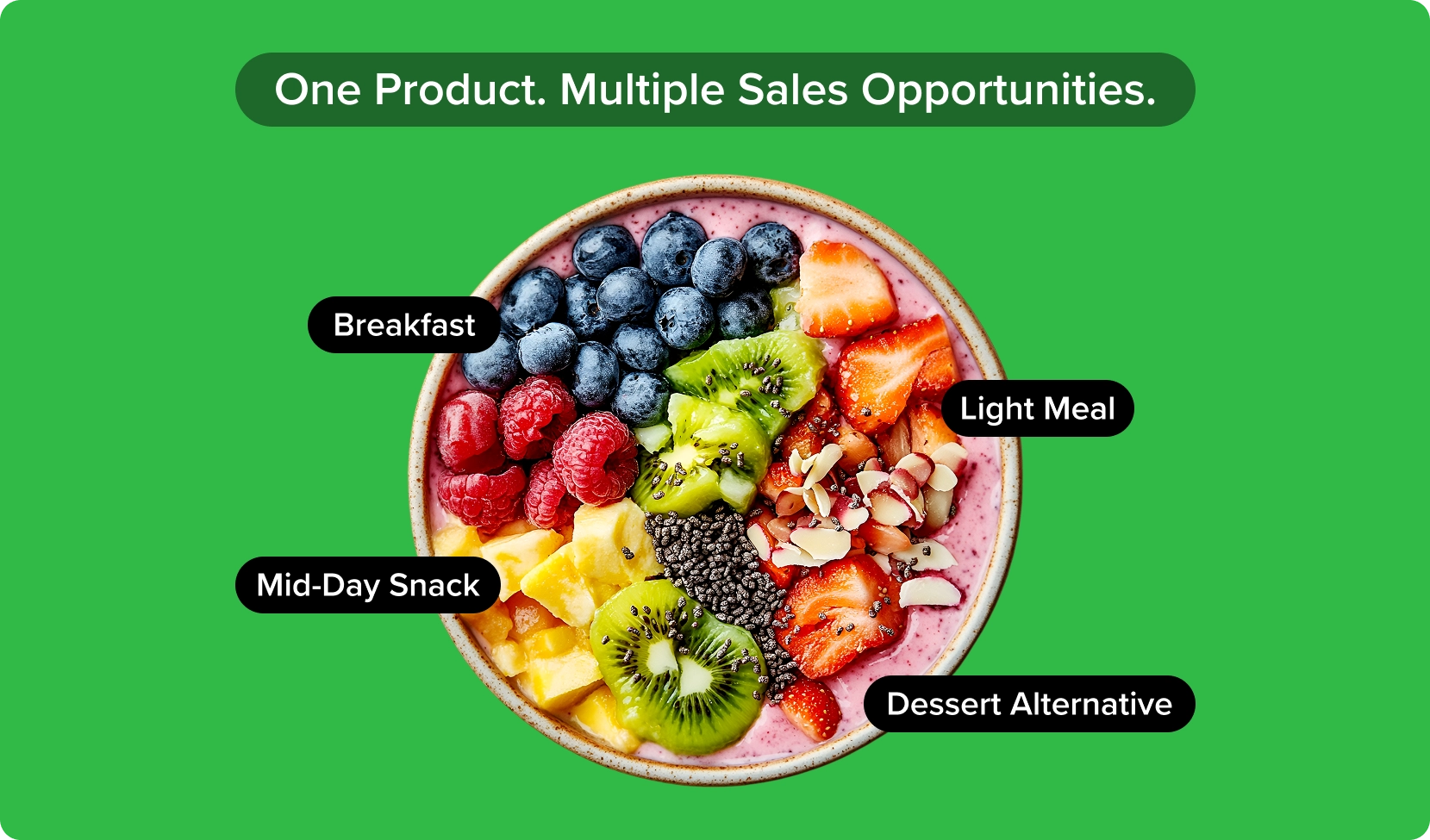
Depending on how they’re merchandised and served, they can function as a quick breakfast, mid-day snack, lighter meal, or even a dessert alternative. This versatility helps operators reach multiple customer segments with a single menu offering.
Meeting Demand for Fresh and Fruit-Forward Choices
Consumers continue to show interest in fruit-based products that deliver both flavor and visual appeal.
Smoothie bowls align with broader demand for fresh, colorful, and better-for-you food choices while providing operators with an opportunity to diversify their grab-and-go assortment.
How Pitaya Foods Sorbet Helps Operators Offer Smoothie Bowls Without the Complexity
For operators interested in adding smoothie bowls, execution often becomes the biggest concern.
Pitaya Foods Sorbet was designed to simplify the process while helping operators deliver a consistent customer experience.
Ready in Seconds for Faster Service
Pitaya Foods Sorbet requires minimal preparation and can be served in seconds.
This allows operators to introduce smoothie bowls without adding complex recipes, specialized equipment, or lengthy preparation steps that can slow down service.
Portion-Friendly for Consistent Execution
Consistency is easier to achieve when portions are standardized.
Pitaya Foods Sorbet helps operators create repeatable servings that support quality control while simplifying inventory management and food cost planning.
Flexible Formats for Different Retail Foodservice Operations
Different operations have different needs.
Pitaya Foods Sorbet is available in convenient grab-and-go smoothie bowl formats as well as larger 3-gallon tubs, giving operators flexibility based on their service model and customer demand.
Whether the goal is offering a ready-to-sell grab-and-go item or incorporating smoothie bowls into a broader foodservice program, operators can choose the format that best fits their operation.
Where Smoothie Bowls Can Fit Within Your Operation
One of the advantages of smoothie bowls is their versatility. They can support a variety of foodservice programs and retail environments, making them a practical addition for operators looking to expand fresh offerings without significantly changing their existing operations.
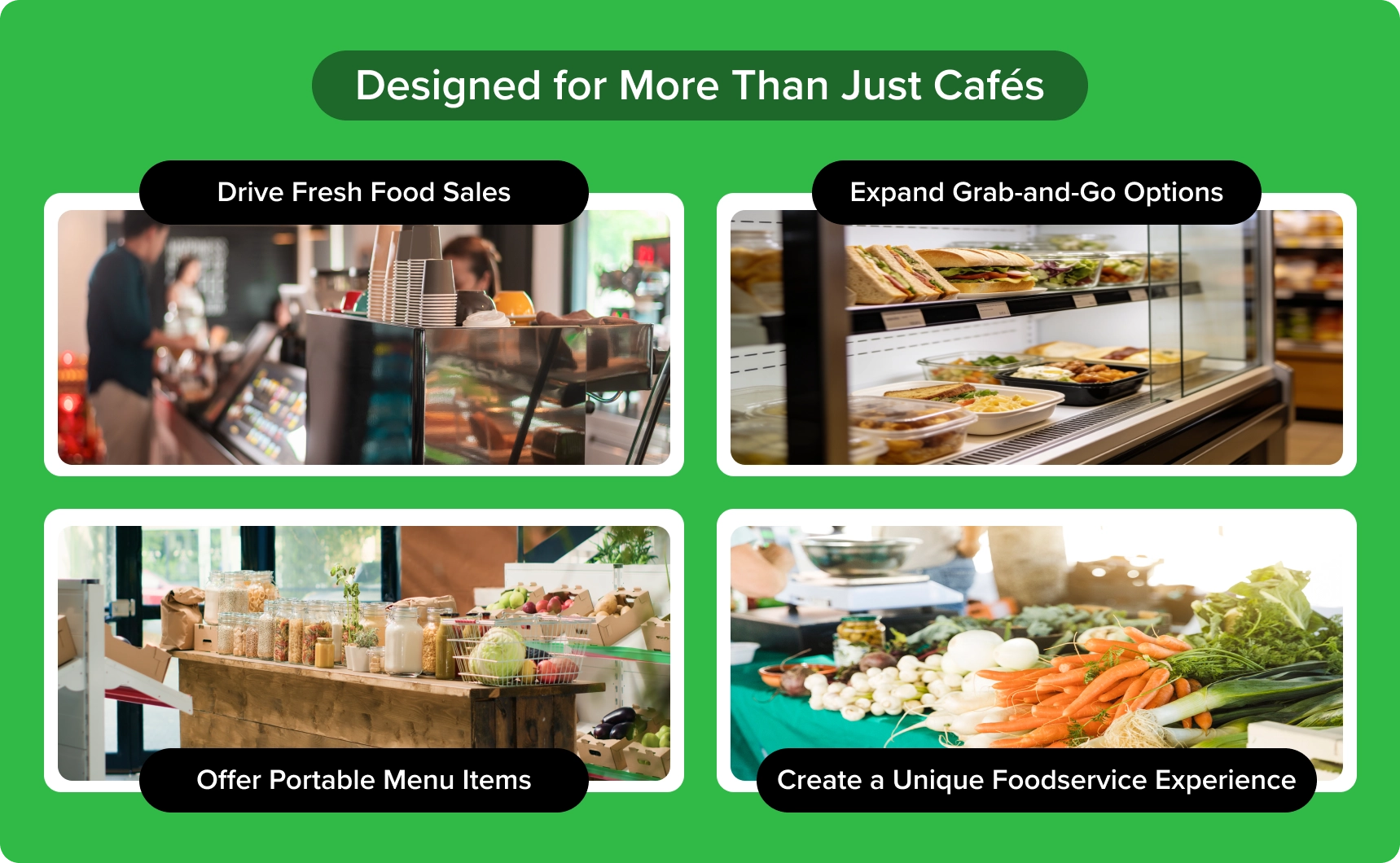
Convenience Stores Looking to Expand Fresh Food Offerings
Convenience stores continue to invest in foodservice as a way to drive traffic and increase basket sizes.
Smoothie bowls provide a fresh option that complements existing grab-and-go programs while appealing to customers seeking alternatives to traditional snacks.
Grocery Stores Seeking New Grab-and-Go Solutions
Grocery retailers are increasingly using prepared foods to differentiate from competitors and create additional revenue streams.
Smoothie bowls can help enhance grab-and-go sections while providing shoppers with a fresh option for meals and snacking.
Concessions Looking for Portable, Trend-Driven Menu Items
Consumers attending sporting events, entertainment venues, and attractions often want convenient foods they can enjoy while on the move.
Smoothie bowls offer a portable, visually appealing option that aligns with evolving consumer preferences.
Specialty Markets Creating Unique Foodservice Experiences
Specialty retailers often look for distinctive products that support their brand positioning.
Smoothie bowls can help create a more differentiated foodservice offering while introducing customers to fresh, fruit-forward menu options.
Building a Stronger Grab-and-Go Program Starts with Simplicity
As operators evaluate new foodservice opportunities, it’s important to balance customer demand with operational realities. Successful grab-and-go programs are just one part of broader profitability strategies that help operators buy better, run smarter, protect profits, and grow revenue.
Focus on Trends That Are Easy to Execute
Not every trend deserves a place in your operation.
The most successful foodservice additions are often the ones that balance consumer demand with operational simplicity.
Prioritize Products That Support Multiple Dayparts
Products that can serve multiple customer occasions help maximize return on investment while minimizing complexity.
The more opportunities a product has to generate sales throughout the day, the more valuable it becomes.
Look for Solutions That Help Drive Foodservice Sales
As foodservice continues to grow across convenience, grocery, concessions, and specialty retail, operators should focus on offerings that help increase revenue without increasing operational burdens. Supporting those efforts with the right foodservice procurement solutions can also help operators control costs while expanding their menus.
The right products support both goals.
Final Thoughts
Building a successful grab-and-go program doesn’t require a complete overhaul of your operation. In many cases, the biggest opportunities come from adding products that align with consumer demand while remaining simple to execute.
As shoppers continue to seek fresh, portable food options, smoothie bowls represent one way operators can expand foodservice offerings, serve multiple dayparts, and create new revenue opportunities without adding unnecessary complexity.
Solutions like Pitaya Foods Sorbet help make that possible by combining convenience, consistency, and flexibility in a format designed for today’s retail foodservice environments.
Looking for simple ways to strengthen your grab-and-go program? Click here to contact the SaveMore team to discover products, supplier programs, and savings opportunities that fit your operation.
Frequently Asked Questions
How can operators determine if a new grab-and-go product is worth adding?
Before introducing a new item, operators should evaluate several factors, including expected demand, preparation requirements, shelf life, food costs, and profit potential. The best additions are products that fit existing workflows, require minimal labor, and appeal to a broad customer base. Testing products in a limited number of locations can also help operators gauge customer interest before expanding systemwide.
What are some effective ways to merchandise grab-and-go products?
Visibility plays a major role in grab-and-go sales. Operators often see stronger results when products are placed near checkout areas, beverage stations, high-traffic entrances, or other impulse-purchase zones. Clear signage, attractive packaging, and strategic cross-merchandising with complementary items can also help increase purchases.
How can grab-and-go offerings help increase average transaction value?
Grab-and-go products can encourage customers to purchase additional items during a single visit. Pairing food items with beverages, snacks, or meal bundles can help increase basket size while providing added convenience for customers. Offering products that serve multiple occasions throughout the day can create additional sales opportunities without requiring a larger menu.
What should operators look for in a smoothie bowl supplier?
Operators should look for products that offer consistent quality, simple preparation, reliable supply, and flexible serving options. Products that require minimal labor while maintaining visual appeal and flavor consistency can help streamline execution and improve the customer experience. Packaging, storage requirements, and portion control capabilities are also important considerations.
What makes Pitaya Foods Sorbet different from traditional smoothie bowl programs?
Unlike traditional smoothie bowl programs that require multiple ingredients, prep work, and employee training, Pitaya Foods Sorbet offers a ready-to-serve solution that helps operators add vibrant smoothie bowls with less labor and operational complexity. Featuring consumer favorites like the electric Pink Dragon Fruit and Traditional Açaí, operators can deliver eye-catching, on-trend flavors with consistent quality and minimal preparation. Available in grab-and-go formats and larger tubs, Pitaya Foods Sorbet provides flexibility for convenience stores, grocery retailers, concessions, and specialty markets looking to expand foodservice offerings without adding complexity.